


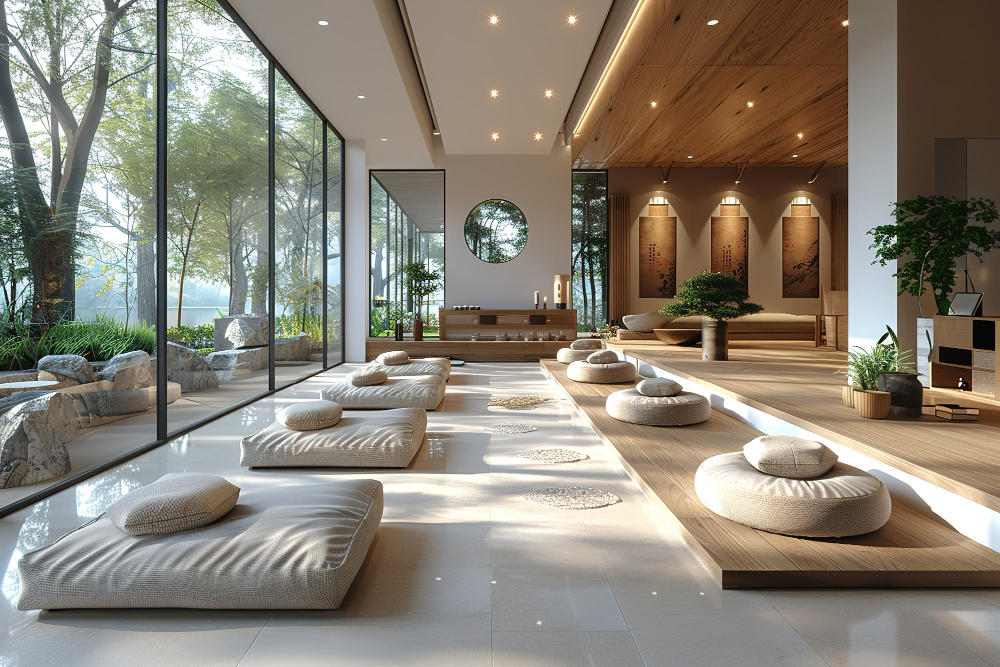





Wellness living has become an important concept for employers, insurers, consultants, and healthcare decision-makers because it expands the conversation about health beyond the workplace and the clinic. Corporate wellness has traditionally focused on programs, screenings, digital tools, incentives, coaching, and access to care, but these interventions compete with the realities of daily life. Where people live influences how they sleep, move, eat, recover, socialize, work remotely, and manage stress. As hybrid work, global mobility, executive health, and aging workforce concerns become more strategic, the residential environment is increasingly relevant to employee health strategy. Luxury real estate is responding to this shift by integrating wellness features into the physical, social, and service design of residential communities. For workforce leaders, the topic is not about lifestyle preference alone; it is about understanding how living environments can support or undermine preventive healthcare, productivity, resilience, and long-term functional capacity.
What Is Wellness Living?
Wellness living refers to residential environments intentionally designed to support health, well-being, recovery, and healthy aging through the built environment and daily lifestyle infrastructure. In professional terms, it is the integration of residential design, environmental quality, movement access, restorative spaces, nutrition support, social connection, and preventive health orientation. The concept is especially relevant in luxury real estate because higher-end residential developments often have the capital, space, and service models needed to test more integrated wellness approaches. However, wellness living should not be interpreted as medical care, a substitute for healthcare, or a guaranteed path to longevity. Its strongest value is in making healthier behaviors easier to sustain by shaping the environment in which those behaviors occur.
Wellness Living Versus Traditional Luxury Amenities
Traditional luxury real estate has often emphasized location, privacy, design quality, views, convenience, and premium amenities. Wellness living adds a more health-oriented lens by asking whether the residence supports sleep, movement, mental well-being, environmental comfort, and long-term usability. A fitness center, pool, spa, or garden may contribute to well-being, but those features alone do not define a wellness living model. A more mature approach looks at the entire residential ecosystem, including lighting, acoustics, air quality, circulation, community design, food access, and recovery spaces. This distinction matters for employers and payers because superficial amenities may create a wellness impression without meaningfully improving the daily conditions that influence health behavior.
How It Relates to Preventive Healthcare and Longevity Medicine
Wellness living aligns with preventive healthcare because it focuses on upstream conditions that can support healthier routines before illness develops or worsens. It also connects with longevity medicine when residential environments are designed to support strength, mobility, sleep, cardiometabolic health, cognitive engagement, and social connection over time. These links should be described carefully, because a residence can support longevity-oriented behaviors without claiming to extend life or prevent disease. In a workforce context, this distinction is important because employers and insurers must avoid overstating outcomes that have not been clinically validated. The more responsible framing is that wellness living can complement employee health strategy by reducing friction around evidence-informed behaviors such as physical activity, recovery, nutrition, and social participation.
Key Elements of a Wellness Living Environment
A credible wellness living model is not defined by one signature feature. It is usually the result of several health-supportive design and operational decisions working together. For luxury real estate, this may include building systems, spatial planning, resident programming, service design, and access to preventive healthcare resources. For corporate wellness and payer audiences, the most important question is whether these elements are meaningful, measurable, inclusive, and aligned with real health needs. The following components are commonly relevant when evaluating wellness living through an employee health strategy or longevity lens:
- Indoor environmental quality is a foundational consideration. Air filtration, ventilation, temperature control, humidity management, and low-emission materials can influence comfort, respiratory health, sleep quality, and perceived well-being.
- Sleep-supportive design is central to preventive healthcare. Residences that consider natural light, nighttime darkness, acoustics, bedroom layout, and thermal comfort may better support recovery and circadian rhythm consistency.
- Movement-supportive infrastructure helps reduce sedentary behavior. Walkable layouts, visible stairways, fitness spaces, mobility zones, outdoor paths, and ergonomic work-from-home areas can make daily activity more natural and less dependent on formal exercise sessions.
- Nutrition access should be treated as part of the living environment. Wellness living may include design and programming that supports healthy food preparation, mindful eating, hydration, and access to balanced dietary options without turning nutrition into a restrictive or medicalized experience.
- Social connection is a health-relevant design priority. Shared spaces, community programming, intergenerational interaction, and low-pressure gathering areas can help reduce isolation while respecting privacy and autonomy.
- Restorative spaces support stress regulation and mental well-being. Quiet rooms, nature exposure, outdoor areas, reflection spaces, and calming circulation patterns can help residents transition from work demands to recovery.
- Accessibility and healthy aging features determine long-term usefulness. Step-free access, safe bathrooms, adaptable layouts, fall-risk reduction, clear wayfinding, and mobility-friendly design make wellness living more relevant across age groups and health statuses.
Strategic Implications for Employers, Payers, and Workforce Decision-Makers
Wellness living has strategic implications because it highlights the role of residential environments in workforce health, especially as work and home life become more integrated. Employers do not need to manage where employees live, but they may need to recognize that housing conditions can affect sleep, stress, musculoskeletal health, productivity, and engagement. Payers may also view wellness living as part of a broader preventive healthcare discussion, particularly for populations focused on healthy aging, chronic disease prevention, or executive health. Consultants and benefits leaders should treat the concept as an environmental health strategy rather than a simple luxury real estate trend. The practical question is not whether every employee should live in a wellness residence, but whether organizations can learn from wellness living principles to improve employee health strategy across different populations.
Executive Health, Remote Work, and Talent Strategy
Executive populations often face high cognitive load, travel demands, irregular schedules, and elevated expectations for performance and availability. For these groups, recovery environments can become strategically important because sleep, stress regulation, movement, and privacy affect decision-making capacity and long-term resilience. Remote and hybrid workers may also experience blurred boundaries between work, rest, and personal life, making residential design more relevant to productivity and well-being. Wellness living principles can inform leadership retreats, relocation planning, executive health programs, and remote work guidance without requiring organizations to promote specific properties. The most useful application is educational: helping decision-makers understand how daily environments either reinforce or weaken the goals of corporate wellness.
Implications for Payers and Benefits Leaders
For payers and benefits leaders, wellness living raises important questions about prevention, engagement, and measurable health outcomes. Health plans and employer-sponsored programs often encourage physical activity, nutrition improvement, sleep hygiene, stress reduction, and chronic disease prevention, but these behaviors are difficult to sustain in environments that work against them. Residential settings that reduce barriers to healthy routines may support better adherence to preventive health recommendations. However, payers should be cautious about assuming that wellness living will directly reduce claims costs without careful evaluation and appropriate time horizons. The strongest opportunity may be in learning which environmental supports improve engagement, satisfaction, recovery, and self-management among specific workforce segments.
Risks, Limitations, and Ethical Considerations
Wellness living should be approached with careful governance because the language of wellness can sometimes exceed the evidence behind it. The first risk is overclaiming, particularly when residential environments are linked to longevity medicine, anti-aging narratives, or biometric improvement. A building can support healthier routines, but it cannot guarantee longer life, disease prevention, or lower healthcare costs. The second risk is inequity, because luxury wellness real estate is often available only to higher-income individuals, executives, or select populations. Employers should be cautious about adopting wellness living concepts in ways that widen perceived gaps between leadership groups and the broader workforce.
Privacy is another important concern when wellness living includes wearable devices, health assessments, environmental monitoring, or personalized programming. Data collected in residential settings can be sensitive because it may reveal sleep habits, movement patterns, health risks, location behavior, and daily routines. Any use of health-related data should be voluntary, transparent, limited in scope, and separated from employment decisions. Another limitation is the possibility of medicalizing everyday life, where residents feel pressured to track, optimize, or quantify all aspects of health. A responsible wellness living model should preserve autonomy, rest, personal preference, and the right not to participate.
What Organizations Should Evaluate When Exploring Wellness Living
Organizations exploring wellness living should begin by defining the purpose of the evaluation. An employer considering the concept for executive health will have different criteria than a payer studying preventive healthcare engagement or a consultant advising on future workforce housing trends. The evaluation should separate design features, wellness programming, clinical services, resident experience, and claimed outcomes. It should also consider whether the model is inclusive, evidence-informed, operationally feasible, and aligned with broader employee health strategy. Without a structured evaluation framework, wellness living can be mistaken for a collection of attractive amenities rather than a serious health-supportive environment.
Decision-makers should examine whether health claims are environmental, behavioral, clinical, or financial. Environmental claims may relate to air, water, light, acoustics, thermal comfort, and accessibility. Behavioral claims may relate to physical activity, sleep routines, nutrition, social connection, or stress management. Clinical claims require a higher standard of evidence, qualified oversight, informed consent, and clear boundaries between wellness programming and healthcare delivery. Financial claims, such as reduced medical spending or improved productivity, should be treated cautiously unless supported by appropriate measurement and realistic attribution.
Organizations should also review governance and professional oversight. Wellness programming should be delivered within appropriate scope, especially when it touches nutrition, fitness, mental well-being, diagnostics, or longevity medicine. If preventive healthcare services are connected to the residential model, there should be clear policies for credentialing, referrals, emergency response, documentation, and continuity of care. Global healthcare access and medical tourism considerations may arise when residents travel internationally for wellness or preventive services, but these should be handled separately from residential wellness claims. The goal is to protect residents, employees, and sponsoring organizations from confusion between lifestyle support and medical decision-making.
Future Outlook: Emerging Trends in Wellness Living and Luxury Real Estate
Wellness living is likely to evolve from amenity-led design toward more integrated health ecosystems. The next stage of luxury real estate will likely place more emphasis on how buildings perform as living environments, not just how they look or what services they offer. Air quality, acoustic comfort, daylight exposure, sleep support, mobility, climate resilience, and social connection may become more important evaluation criteria. This shift is consistent with the broader movement in corporate wellness from participation-based programming toward prevention, personalization, and measurable daily-life support. For employers and payers, the future relevance of wellness living will depend on whether it can demonstrate practical value without relying on exaggerated health promises.
Longevity-oriented residential design is also expected to become more prominent as workforces age and people remain professionally active later in life. Residences that support strength, balance, cognitive engagement, mobility, and social participation may be better aligned with healthy aging than environments designed only for short-term luxury consumption. Preventive healthcare may become more embedded into residential life through education, screenings, lifestyle coaching, and referral pathways, provided that privacy and clinical governance are handled responsibly. At the same time, there will likely be greater scrutiny of wellness claims, especially when they involve biomarker improvement, anti-aging language, or medical tourism. The most durable models will be those that combine design quality with ethical standards, resident autonomy, and a clear distinction between supportive living and clinical care.
Educational Closing Perspective
Wellness living should be understood as part of a broader shift from reactive healthcare to prevention-oriented environments. For luxury real estate, it expands the definition of value from aesthetics and exclusivity to include health-supportive design, recovery, resilience, and long-term function. For employers, insurers, and healthcare decision-makers, it offers a useful framework for thinking about how residential settings influence employee health strategy, executive well-being, healthy aging, and preventive healthcare engagement. Its strongest contribution is not in promising better health outcomes by itself, but in making healthier choices easier to practice consistently. As the field matures, organizations should evaluate wellness living through evidence, ethics, access, data protection, and alignment with workforce needs. Professionals examining how longevity-focused residential models are being positioned can explore wellness-centered living environments while applying the same standards of due diligence, neutrality, and health governance outlined above.
