







The conversation around employee wellbeing has expanded significantly over the past decade. Employers, insurers, consultants, and healthcare decision-makers increasingly recognize that workforce health extends beyond traditional medical benefits and episodic care. Organizations are exploring comprehensive approaches that address physical health, mental wellbeing, resilience, recovery, and long-term health outcomes.
Within this evolving landscape, luxury wellness resorts have emerged as a distinct category of wellness infrastructure. While they are often associated with hospitality and leisure, their growing relevance lies in their ability to integrate preventive healthcare, health optimization, lifestyle medicine principles, and personalized wellness experiences within a highly structured environment.
For organizations evaluating innovative approaches to corporate wellness and employee health strategy, understanding the characteristics that define a luxury wellness resort is important. Not every wellness-focused destination operates according to the same standards, methodologies, or objectives. Distinguishing between recreational wellness offerings and comprehensive wellness ecosystems helps healthcare leaders make more informed decisions when assessing workforce health initiatives.
As preventive healthcare continues to gain importance and organizations seek ways to support healthier, more resilient populations, luxury wellness resorts represent a unique intersection of hospitality, health services, wellness science, and personalized care.
Understanding the Definition of a Luxury Wellness Resort
A luxury wellness resort is a hospitality-based environment specifically designed to support health, wellbeing, recovery, prevention, and lifestyle improvement through a combination of personalized programming, wellness services, health-focused amenities, and evidence-informed interventions.
Unlike conventional resorts where wellness may function as an optional amenity, wellness serves as the central organizing principle of the guest experience. The physical environment, operational model, service design, nutrition programs, activity offerings, and educational resources are all structured around wellbeing outcomes.
The "luxury" component extends beyond aesthetics or premium accommodations. In professional terms, luxury often reflects a higher degree of personalization, service integration, privacy, comfort, and access to specialized expertise. The experience is typically tailored to individual goals, health status, preferences, and lifestyle considerations.
Many luxury wellness resorts also emphasize holistic wellbeing. This means addressing multiple dimensions of health simultaneously, including physical fitness, nutrition, sleep quality, stress management, emotional wellbeing, social connection, and recovery. The objective is not simply relaxation but meaningful support for sustainable health improvement.
For healthcare decision-makers, the defining distinction lies in the integration of wellness into the entire operational framework rather than treating wellness as a supplemental service.
The Evolution from Hospitality to Preventive Healthcare
The Shift Toward Health-Oriented Travel
Historically, resorts primarily focused on recreation, entertainment, and leisure. Wellness services such as spas or fitness centers were often secondary amenities designed to complement traditional hospitality offerings.
Over time, growing awareness of chronic disease risk factors, workplace stress, burnout, and lifestyle-related health challenges contributed to increased demand for more purposeful wellness experiences. Consumers and organizations alike began seeking environments that support health improvement rather than temporary escape.
This shift aligned with broader healthcare trends emphasizing prevention, early intervention, and lifestyle modification. As a result, many wellness destinations evolved beyond spa-centric models toward more comprehensive health-focused ecosystems.
Today, luxury wellness resorts increasingly position themselves as environments that support preventive healthcare objectives while maintaining high standards of hospitality and guest experience.
The Influence of Lifestyle Medicine
Lifestyle medicine principles have influenced many modern wellness resort models. These principles focus on evidence-based behavioral interventions related to nutrition, physical activity, sleep, stress management, substance use reduction, and social connection.
Rather than concentrating exclusively on symptom management, lifestyle medicine seeks to address underlying behavioral and environmental factors that influence long-term health outcomes.
Luxury wellness resorts often incorporate these concepts into structured wellness programs. Guests may participate in educational sessions, fitness programming, nutritional consultations, mindfulness practices, recovery therapies, and behavior change initiatives designed to support healthier habits.
For employers and insurers, the relevance lies in the alignment between these approaches and broader population health objectives aimed at reducing health risks and improving overall wellbeing.
Core Characteristics of a Luxury Wellness Resort
Personalized Wellness Programming
One of the defining characteristics of a luxury wellness resort is personalization. Wellness interventions are increasingly tailored to individual needs rather than delivered through generic programs.
Personalization may involve health assessments, wellness consultations, fitness evaluations, nutritional planning, sleep analysis, or lifestyle reviews. These inputs help guide customized recommendations and experiences.
The objective is to create interventions that reflect an individual's unique health profile, goals, preferences, and challenges. Personalized approaches are generally associated with greater engagement because participants perceive the experience as more relevant and actionable.
For healthcare leaders evaluating wellness initiatives, personalization often serves as an indicator of program sophistication and potential effectiveness.
Integrated Health and Wellness Services
Luxury wellness resorts frequently combine multiple wellness disciplines within a unified framework. Rather than operating as separate departments, fitness, nutrition, recovery, mindfulness, and educational services are coordinated to support shared wellbeing goals.
This integrated approach helps create consistency across the participant experience. Wellness professionals may collaborate to align recommendations and reinforce behavioral changes across multiple touchpoints.
Integration also reflects a broader trend in healthcare toward interdisciplinary models that recognize the interconnected nature of physical, mental, and behavioral health.
Organizations exploring workforce health strategies increasingly value integrated approaches because they mirror real-world determinants of health and wellbeing.
Evidence-Informed Programming
While wellness practices vary widely across the industry, leading luxury wellness resorts increasingly emphasize evidence-informed methodologies.
Programs may draw upon research related to exercise science, nutrition, behavioral psychology, stress management, sleep medicine, recovery science, and preventive healthcare. Educational content often seeks to translate scientific concepts into practical actions that participants can apply in daily life.
Evidence-informed programming does not necessarily imply medical treatment. Rather, it reflects a commitment to grounding wellness interventions in credible scientific knowledge and measurable health principles.
For employers and insurers, this distinction is important when evaluating the quality and credibility of wellness offerings.
The Role of Environment in Wellness Outcomes
Biophilic and Restorative Design
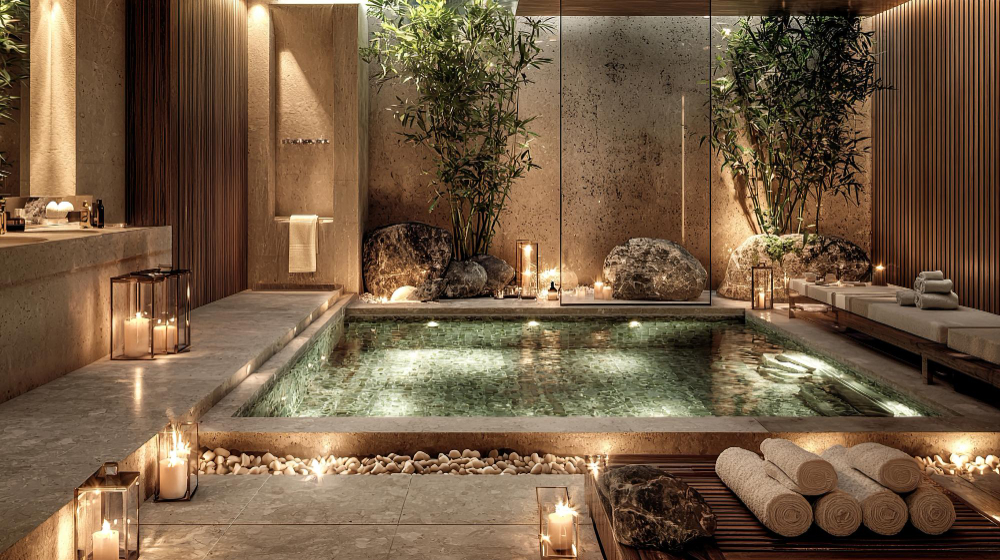
The physical environment is a significant component of luxury wellness resort design. Many facilities incorporate natural elements, restorative architecture, and spaces intended to promote relaxation and mental recovery.
Research suggests that exposure to nature, natural light, green spaces, and calming environments may support stress reduction, emotional wellbeing, and cognitive restoration. Wellness-oriented design therefore becomes more than an aesthetic consideration.
Luxury wellness resorts often integrate outdoor movement opportunities, quiet reflection spaces, wellness gardens, and environmentally conscious design principles to enhance the overall guest experience.
These environmental factors can contribute to a sense of recovery that complements structured wellness programming.
Sleep and Recovery Infrastructure
Recovery has become a major focus within contemporary wellness strategy. Increasing evidence highlights the importance of sleep quality, stress recovery, and physiological restoration in supporting long-term health outcomes.
Luxury wellness resorts frequently invest in environments designed to support healthy sleep behaviors and recovery practices. This may include noise reduction measures, lighting strategies, sleep education, relaxation techniques, and dedicated recovery spaces.
For workforce health leaders, recovery is particularly relevant because chronic stress and insufficient sleep are associated with reduced productivity, higher healthcare utilization, and increased risk of burnout.
By emphasizing recovery alongside fitness and nutrition, wellness resorts reflect a more comprehensive understanding of human performance and wellbeing.
Strategic Relevance for Employers and Healthcare Decision-Makers
Supporting Preventive Healthcare Objectives
Preventive healthcare continues to be a strategic priority across healthcare systems, employers, and insurers. Rising rates of chronic conditions have reinforced the importance of addressing health risks before they require intensive medical intervention.
Luxury wellness resorts often align with prevention-focused objectives by promoting healthy behaviors, health education, stress management, and lifestyle modification. These interventions may complement broader organizational wellness strategies.
While wellness experiences alone do not replace healthcare delivery, they can contribute to greater awareness of health behaviors and personal wellbeing responsibilities.
Healthcare decision-makers increasingly view prevention as a long-term investment in population health rather than a standalone initiative.
Workforce Resilience and Organizational Performance
Organizations face growing challenges related to employee stress, burnout, mental fatigue, and workforce disengagement. These issues have implications for productivity, retention, absenteeism, and organizational culture.
Luxury wellness environments may provide structured opportunities for recovery, reflection, resilience-building, and behavior change. Participants often gain exposure to practices that can support long-term wellbeing beyond the duration of their stay.
For HR leaders and consultants, resilience is becoming a strategic workforce capability rather than merely a wellness outcome. Programs that strengthen adaptability, stress management, and recovery skills may contribute to healthier and more sustainable workforces.
As organizational performance becomes increasingly linked to human wellbeing, wellness-focused environments are attracting greater attention from decision-makers.
What Organizations Should Evaluate
When assessing luxury wellness resorts as part of a broader employee health strategy, organizations should evaluate several key factors:
- Clinical and wellness expertise. Organizations should assess the qualifications, experience, and multidisciplinary capabilities of wellness professionals involved in program delivery. Expertise influences both program quality and participant safety.
- Evidence-informed methodology. Decision-makers should examine whether interventions are grounded in credible research and recognized wellness principles. Programs that emphasize measurable outcomes may offer greater strategic value.
- Personalization capabilities. The ability to tailor experiences to diverse health profiles is increasingly important. Personalized programming often improves engagement and relevance across varied populations.
- Data privacy and governance. Health-related information requires careful handling. Organizations should understand how wellness data is collected, stored, protected, and utilized.
- Accessibility and inclusivity. Wellness programs should accommodate individuals with different backgrounds, abilities, health conditions, and cultural perspectives. Inclusive design supports broader participation.
- Alignment with organizational goals. Wellness experiences should connect to defined workforce health objectives rather than operate as isolated initiatives. Strategic alignment improves long-term impact.
- Measurement and evaluation. Organizations benefit from understanding how success is defined and assessed. Clear metrics support accountability and informed decision-making.
Risks, Limitations, and Ethical Considerations
Distinguishing Wellness from Healthcare
One important consideration involves maintaining appropriate distinctions between wellness services and healthcare services. Wellness programs may support healthy behaviors and wellbeing, but they are not substitutes for medical diagnosis, treatment, or clinical care.
Organizations should ensure that wellness offerings communicate their scope clearly and avoid creating unrealistic expectations regarding health outcomes.
Maintaining transparency helps protect participants and supports responsible program design.
Healthcare decision-makers must carefully evaluate where wellness initiatives fit within broader health management strategies.
Equity and Access Considerations
Luxury wellness environments can present challenges related to accessibility and equity. Opportunities that are available only to select populations may create perceptions of unequal access or preferential treatment.
Organizations should consider how wellness investments align with broader workforce wellbeing objectives and whether benefits are distributed fairly across employee populations.
Inclusive wellness strategies often generate stronger engagement and organizational trust than narrowly targeted initiatives.
Balancing personalization with equitable access remains an important governance consideration.
Measuring Long-Term Impact
Another limitation involves demonstrating sustained outcomes. Wellness experiences may generate positive short-term effects, but long-term behavioral change can be difficult to achieve and measure.
Organizations should avoid assuming that participation automatically translates into lasting health improvements. Follow-up support, ongoing engagement, and integration with broader wellness initiatives often influence long-term success.
Evaluating outcomes requires realistic expectations and a commitment to continuous assessment.
Future Trends Shaping Luxury Wellness Resorts
Greater Integration with Health Technology
Technology is expected to play an increasingly important role in wellness personalization. Digital health tools, wearable devices, biometric monitoring, and data-driven insights may help create more individualized experiences.
These technologies can support goal tracking, behavior change, and ongoing engagement beyond the resort setting. However, they also introduce important considerations related to privacy and data governance.
As technology capabilities expand, organizations will need to balance innovation with responsible oversight.
The future likely involves hybrid wellness models that combine physical experiences with ongoing digital support.
Expansion of Longevity and Healthy Aging Programs
Interest in longevity, healthy aging, and healthspan optimization continues to grow across healthcare and wellness sectors. Luxury wellness resorts are increasingly incorporating educational and preventive approaches related to long-term vitality and functional health.
Rather than focusing solely on disease avoidance, these programs often emphasize maintaining physical, cognitive, and emotional wellbeing throughout life.
Healthcare decision-makers are monitoring these developments because aging populations create significant workforce and healthcare challenges.
The intersection of longevity science and preventive healthcare is expected to remain a major area of innovation.
Increased Focus on Outcomes and Accountability
As wellness investments become more strategic, stakeholders are demanding stronger evidence of value and measurable outcomes.
Future wellness models will likely place greater emphasis on data collection, participant engagement metrics, behavior change indicators, and population health measures.
This shift reflects broader healthcare trends toward accountability, transparency, and evidence-based decision-making.
Organizations evaluating wellness initiatives will increasingly prioritize programs that demonstrate clear alignment with workforce health objectives and measurable impact.
As luxury wellness resorts continue to evolve, they are likely to play a growing role within broader discussions about preventive healthcare, workforce health, resilience, and long-term wellbeing. For employers, insurers, consultants, and healthcare decision-makers, understanding the operational, clinical, and strategic characteristics of these environments is essential when evaluating emerging approaches to employee health strategy. Those seeking a deeper understanding of how integrated wellness, longevity-focused living environments, and health-centered hospitality models are developing can explore examples of a modern luxury wellness residence concept as part of the broader evolution of wellness infrastructure.
